BBQ Pellet Advice for Choosing Smoker Pellets
Good BBQ pellet advice starts with the food, the smoker and the smoke flavour you want.
BBQ pellets, smoker pellets and smoking pellets are often different names for the same job: food-grade hardwood pellets made to create heat, smoke and flavour in a pellet smoker.
The best pellet choice depends on what you cook most, how strong you like your smoke and whether you are cooking at home, for events, hospitality or trade supply.
Short answer: Choose BBQ pellets by matching the smoke strength to the food. Hickory and Oak suit stronger smoke profiles, Apple and Cherry suit lighter cooks, and Gourmet Blend is the safest everyday starting point.
BBQ pellets, smoking pellets and pellet grill fuel.
People use different names for the same basic job.
BBQ pellets, smoking pellets, smoker pellets, grilling pellets and pellet grill fuel are all terms people use when looking for wood pellets made for cooking.
The important part is not the name on the search bar. It is choosing food-grade BBQ pellets made for smokers and grills, not heating pellets or unknown fuel.
Start with what you cook.
Pellet choice should start with the food.
Brisket and beef ribs can handle stronger smoke. Pork works well with fruitwood, hickory or balanced blends. Chicken takes smoke quickly, so lighter pellets often make more sense. Lamb can sit nicely with balanced hardwoods, oak or hickory.
If you cook a bit of everything, Gourmet Blend is the safest Bear Mountain starting point. Hickory is the stronger classic BBQ choice.
Choose BBQ pellets by food and smoke strength
- Strong smoke: Hickory, Oak
- Balanced smoke: Gourmet Blend
- Sweeter smoke: Apple, Cherry, Maple
- Beef and brisket: Hickory, Oak or Gourmet Blend
- Pork ribs and pulled pork: Apple, Cherry, Hickory, Maple or Gourmet Blend
- Chicken: Apple, Cherry, Maple or Gourmet Blend
- Seafood: Apple, Cherry or Maple
- Everyday mixed cooking: Gourmet Blend
American BBQ is regional, so pellet choice should be practical.
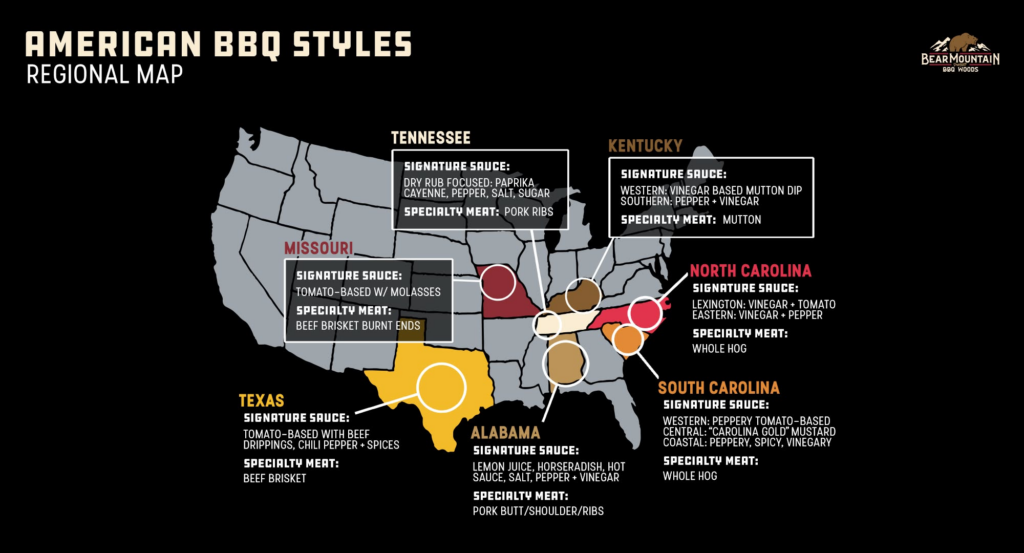
American BBQ styles vary by region, meat and sauce. Pellet choice should still come back to what you cook most.
American BBQ is not one single flavour.
Texas brisket, Carolina whole hog, Tennessee pork ribs and Kentucky mutton all sit in different BBQ traditions. The common thread is smoke, fire and choosing the right wood profile for the food.
For Australian cooks, that means pellet choice should start with what you cook most. Brisket can carry stronger smoke. Pork gives you room to play with hickory, fruitwood or blends. Chicken needs more care. Mixed BBQ usually starts safest with Gourmet Blend.
Food-grade pellets matter.
A pellet smoker uses pellets for heat and smoke, so the quality of the pellet matters.
Use food-grade BBQ pellets made for cooking. Do not use heating pellets in a smoker. The timber source, manufacturing process and any additives need to make sense for food, not just heat.
Advice for home, hospitality and trade buyers.
A home cook might need help choosing the right first bag.
A caterer, food truck, venue or BBQ operator needs to think about monthly use, storage, freight, flavour consistency and repeat supply.
A retailer or reseller needs a clear range story, not just another bag on the shelf.
That is where American Hardwood BBQ helps qualify the enquiry before pointing it towards the right supply path.
BBQ pellet guides.
Where to buy Bear Mountain BBQ pellets in Australia
Bear Mountain BBQ pellets in Australia
Bear Mountain pellet flavour guide
Bear Mountain BBQ pellet trade enquiries
Need help choosing BBQ pellets?
Tell us what smoker you run, what you cook most, where you are located and whether you are buying for home, hospitality, events, resale, bulk or trade.
We will help narrow down the right Bear Mountain pellet flavour and supply path.