What makes Bear Mountain BBQ pellets different?
A lot of pellet bags look similar from the outside. Same size bag. Similar flavour names. Similar claims about hardwood.
The difference shows up once you cook with them. The wood source, the way the pellet is made, the consistency from bag to bag, the amount of dust in the bag, and the smoke profile all matter.
This page explains what Australian cooks should look for in BBQ pellets, and where Bear Mountain fits.
Pellets are simple to pour, but not simple to make.
A BBQ pellet looks simple. A small piece of compressed hardwood, straight into the hopper.
The making of it is where the details matter.
The wood species, moisture level, particle size and cleanliness of the raw material all affect the finished pellet. So does the way the pellet is pressed, cooled, stored and transported.
That is why two pellet bags can look similar, but behave differently in a smoker. One may feed cleanly and burn steadily. Another may carry too much dust, break down too easily, or give a smoke profile that changes from bag to bag.
For backyard cooks, that can be annoying. For caterers, venues and anyone cooking regularly, consistency matters.
Good pellets start before they reach the pellet mill.
Pellet quality starts with consistent wood going in.
The wood species, moisture level, particle size and cleanliness of the raw material all affect the finished pellet. When those inputs move around, the pellet can move around too.
That matters for backyard cooks. It matters even more for venues, caterers and trade buyers who need the same result from bag to bag.
A quality pellet should hold together properly.
Wood naturally contains lignin. With the right heat and pressure, that lignin helps bind the pellet as it cools.
That gives the pellet enough strength to travel, pour and feed through the hopper, while still breaking down properly in the fire pot.
You do not want pellets that turn to dust in the bag. You also do not want pellets so hard that they create feeding problems.
Kiln dried, low moisture pellets.
Bear Mountain describes its pellets as kiln dried and low moisture.
That matters because moisture is the enemy of good pellet performance. Dry pellets feed better, burn cleaner and are less likely to create storage and hopper problems.
Once the bag is open, keep pellets sealed, dry and off the floor.
Smoke flavour is more than the name on the bag.
Apple does not mean the smoke will smell like fresh apples. Hickory does not mean the bag needs to be mostly hickory to give a hickory profile.
In pellet cooking, the base wood and the accent wood both matter. The aim is balance, clean burn and a smoke profile that suits the food.
That is why Gourmet Blend is a sensible first bag for mixed BBQ cooks, while Hickory suits people chasing a stronger classic BBQ profile.
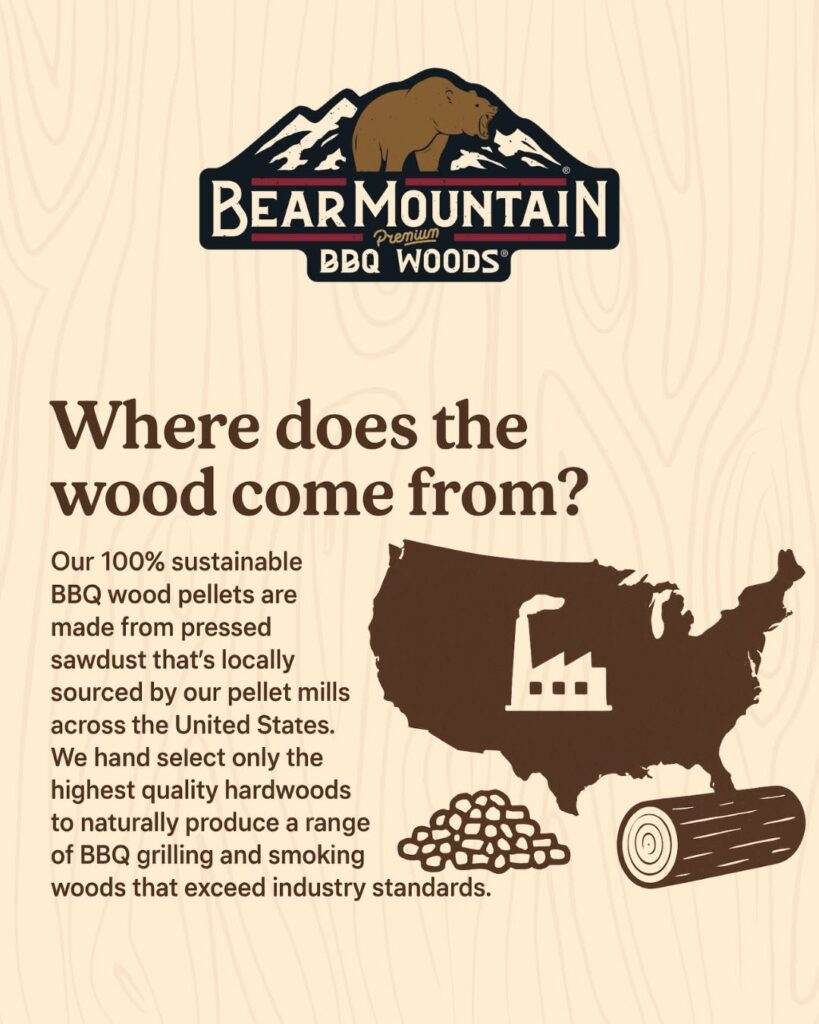
Bear Mountain says its BBQ wood pellets are made from pressed sawdust sourced by pellet mills across the United States.
For Australian cooks, the important part is not the map. It is the product story behind the bag. These are BBQ pellets made for grilling and smoking, with hardwood selected for cooking, smoke and flavour.
What about ash, bark and online claims?
There is plenty of talk online about ash, bark and pellet quality. Some of it is useful. Some of it gets repeated without much context.
Ash can be affected by the wood, the smoker, the cooking temperature, airflow, storage and moisture.
The better question is not whether one person saw ash in one cook. The better question is whether the pellets are made consistently, stored properly, and suited to the smoker and cooking style.
Can Bear Mountain pellets be used in different pellet smokers?
Many pellet smokers are built to run food-grade BBQ pellets, but you should always follow your smoker manual.
The main things to avoid are damp pellets, dusty pellets, heating pellets, or pellets that have been stored badly.
If you are not sure where Bear Mountain fits with your smoker, tell us the model you use and what you cook most. We can help you choose a sensible starting point.
Where Bear Mountain fits for Australian cooks.
For most mixed BBQ cooks, Gourmet Blend is the easiest place to start. It gives you a broad smoke profile without locking you into something too strong.
Hickory is the better choice when you want a bolder classic BBQ flavour, especially for brisket, beef ribs, pork and lamb.
Apple, Cherry and Maple sit on the lighter and sweeter side. Oak, Mesquite, Bourbon BBQ and Savory suit cooks looking for something stronger or more specific.
If you are ready to move from choosing a flavour to finding the right supply path, read about Bear Mountain BBQ pellet supply in Australia.
Common Bear Mountain pellet questions.
Are Bear Mountain BBQ pellets available in Australia?
- Yes. Bear Mountain BBQ pellets are available in Australia, with flavour availability depending on supply at the time of enquiry.
Which Bear Mountain pellet should I try first?
- Gourmet Blend is the easiest starting point for most mixed BBQ cooks. Hickory is better if you want a stronger classic BBQ profile.
Are all BBQ pellets the same?
- No. Pellet quality can be affected by wood source, moisture, pellet durability, dust, storage and consistency from bag to bag.
Can I use Bear Mountain pellets in my pellet smoker?
- Many pellet smokers use food-grade BBQ pellets, but always follow your smoker manual. If you are unsure, send us your smoker model and we can help you choose a sensible option.
Are Bear Mountain BBQ pellets shipped from Sydney?
- Bear Mountain BBQ pellets are landed and shipped from a Sydney based warehouse, with supply options across Australia depending on stock, location and order size.